

How often do you practice trot jumps? Many riders don’t realize just how beneficial they can be. Even if you don’t do them in the show ring—for equitation or Handy Hunter classes—they can be a valuable part of your training program.
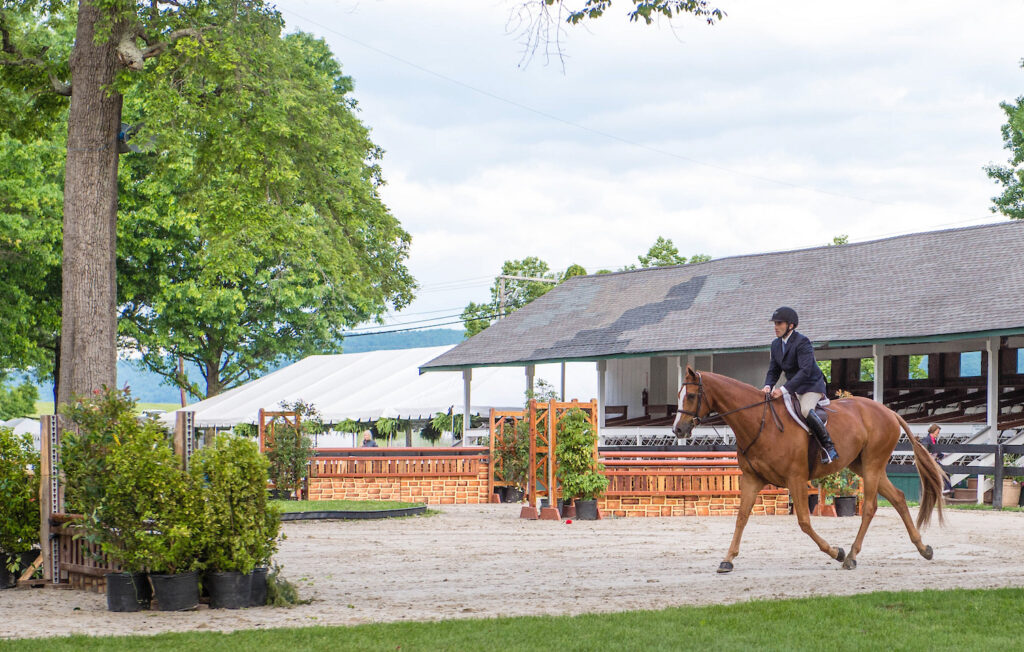
Trot jumps are excellent for:
Young horses: Trot jumps will help improve a young horse’s balance and timing over small jumps while his canter is still developing. For most young horses, it’s easier to regulate the trot than the canter. By sitting quietly in the approach to the jump, you allow your horse to figure out the takeoff spot on his own. This will help him develop his own eye and learn how to adjust his stride without relying entirely on you to control the distances.
Nervous or spooky horses: Trot jumps are a great tool to build confidence in horses who tend to be spooky, anxious or rush their approaches because they have more time to study the fences on the approach. After they figure out how easy it is to pop over small fences from this slower speed, they quickly realize that they don’t have to race at the jumps and push hard off the ground to clear them. The slower and more relaxed they learn to be on takeoff and landing, the better their jumping efforts become.
Rider balance, position and patience: It gives you time to focus on staying with your horse’s stride—never getting ahead of or behind it—so that you’re in perfect balance in the air. It’s also excellent patience training: teaching you to wait quietly for the jump to come to you so that his body can rock back on takeoff rather than hunting for a distance, sometimes making a move at the wrong moment and throwing him off balance.
When horse shopping: Besides incorporating trot jumps into my training at home, I also use them when I am buying horses. They are a great way to evaluate a horse’s natural eye and balance. Some horses don’t know where to put their legs or simply step over the small jumps. Really talented horses stay in beautiful balance right up to each fence and jump it neatly every time.
In the warm-up ring: Trotting jumps is often beneficial in the warm-up ring, as well. With some horses, it’s a good tool for setting the tone for the round. I rode a horse named Calgary who always performed much better when we started his warm-up with trot jumps. He had a long canter stride that was hard to adjust, plus he was a slightly nervous horse. If I didn’t trot any fences in his warm-up, I felt like I always had to hold him back from the jumps in the show ring.
Prepping for equitation and Handy Hunters: If you are riding trot jumps in the show ring, it’s important to remember that the challenge is not just the jump. You have to stay balanced, steady and straight through the downward transition from canter, the approach to the jump, the effort in the air and the recovery afterward. I recommend starting with the following exercise.
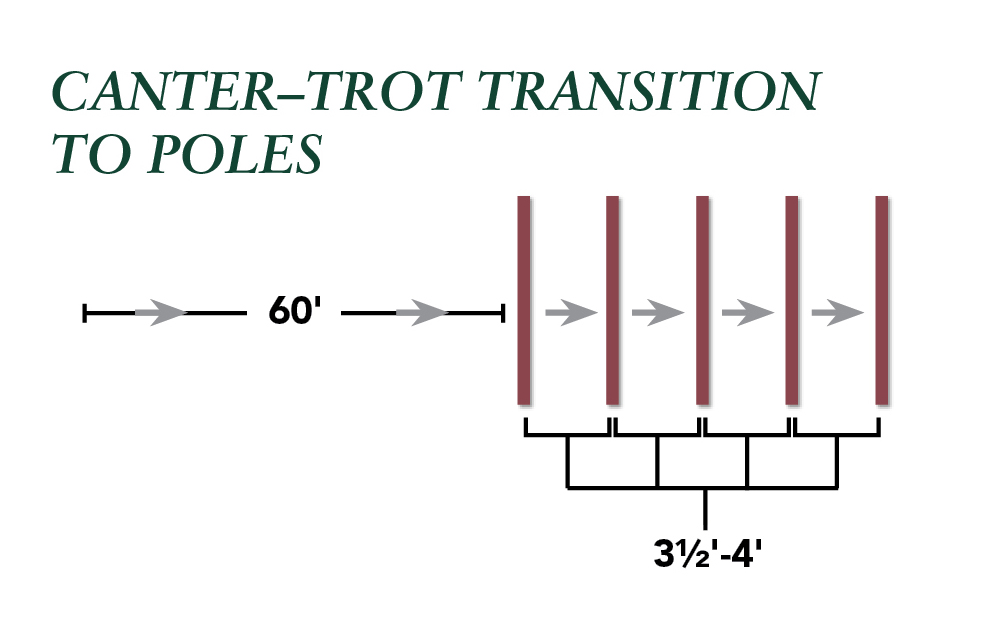
Canter–Trot Transition to Poles
One of the most common mistakes I see with trot jumps in the show ring is the rider leaning back too far in the canter–trot transition, which causes the horse to fall into an unbalanced trot. The rider then falls behind the motion and gets stiff and rigid. This, in turn, pushes the horse out in front of her, rushing to the jump, leaning on his rider’s hands and possibly even breaking back into the canter—a fault that the judge has to penalize.
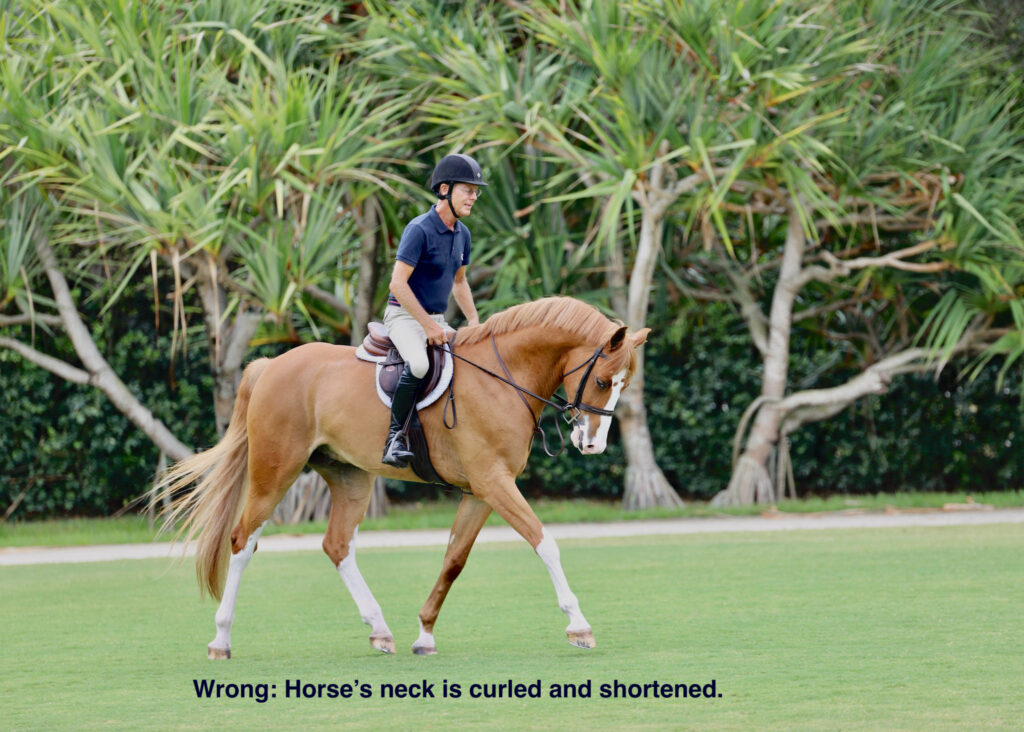
Another common problem I see in the ring is horses who tuck their noses down and in toward their chests during and after the transition, pulling their riders out of the tack. In this case, the horse often falls behind the rider’s leg (loses the desired forward momentum), and the rider gets ahead of the horse’s stride, tipping her balance up onto his neck.
With his nose tucked in like this, he can’t judge the distance properly and gets closer to the jump than he should. This prevents him from rocking correctly back onto his hindquarters on takeoff and rotating his shoulders up and forward. The result is a low, unimpressive effort, with the horse jumping “over his front end.”
To avoid either of these mistakes, set up three to five trot poles about 3½ to 4 feet apart. (See diagram above.)
Follow these three steps to ride the exercise correctly:
Step 1. Establish a good, rhythmic canter, checking that you are balanced over your stirrups with a slightly closed hip angle before making a smooth turn toward the trot poles. About 60 feet away from the poles, prepare for the downward transition to trot by stretching your upper body tall—think “longer and stronger”—without changing your hip angle.
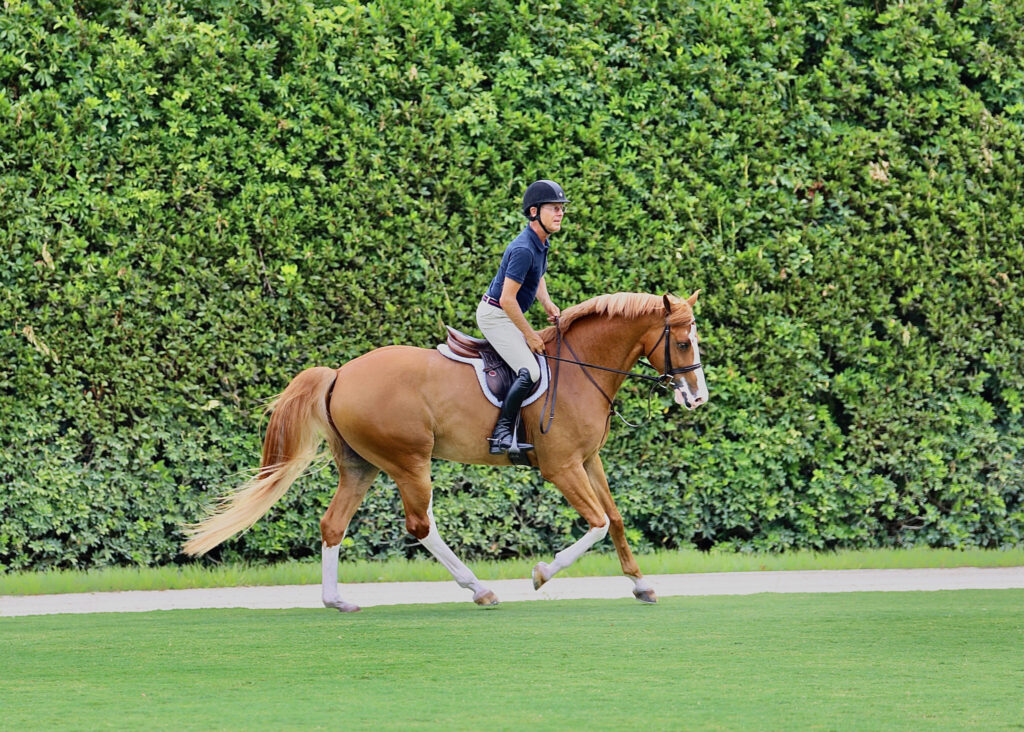
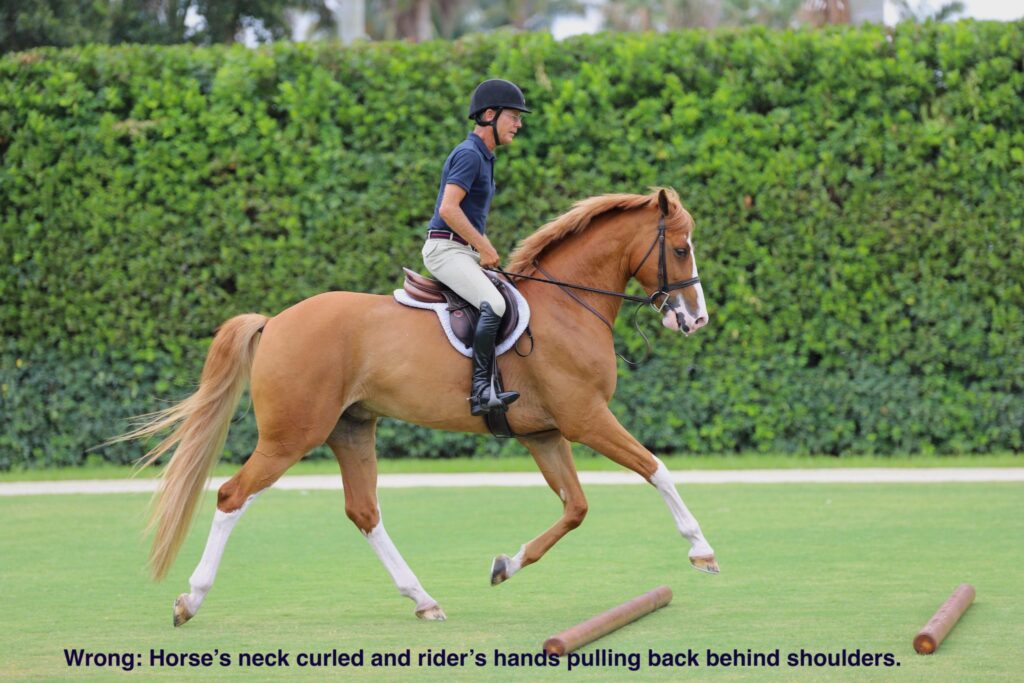
Step 2. To ask for the transition, close your legs on your horse’s sides to support his balance. Then close your hands on the reins to increase the pressure. At the same time, focus on staying strong in your core, so that your upper body stays balanced over the horse—not leaning too far backward or forward. Most importantly, be sure that your reins are short enough that you won’t be tempted to pull your hands behind your shoulders or change your hip angle. The better your leg-to-hand connection becomes, the less likely you will be to make these mistakes.
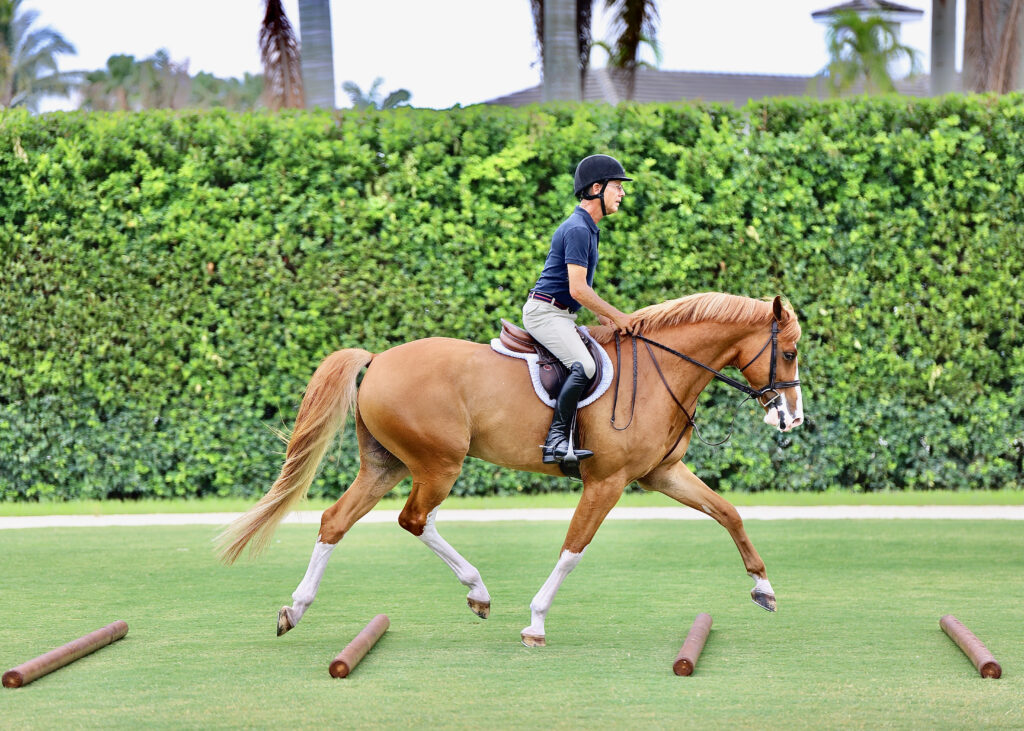
Think of this transition as being similar to the way you’d steady a horse in a line: smooth and balanced, without any change in the level of his head carriage. The best way to guarantee this is by not changing your own balance. If he tends to drop his head below his withers, focus on using your core and legs—instead of your hands—to bring it back up. If he tries to pull you up out of the saddle, bring him all the way down to a halt. Then circle back and start the exercise from the beginning.
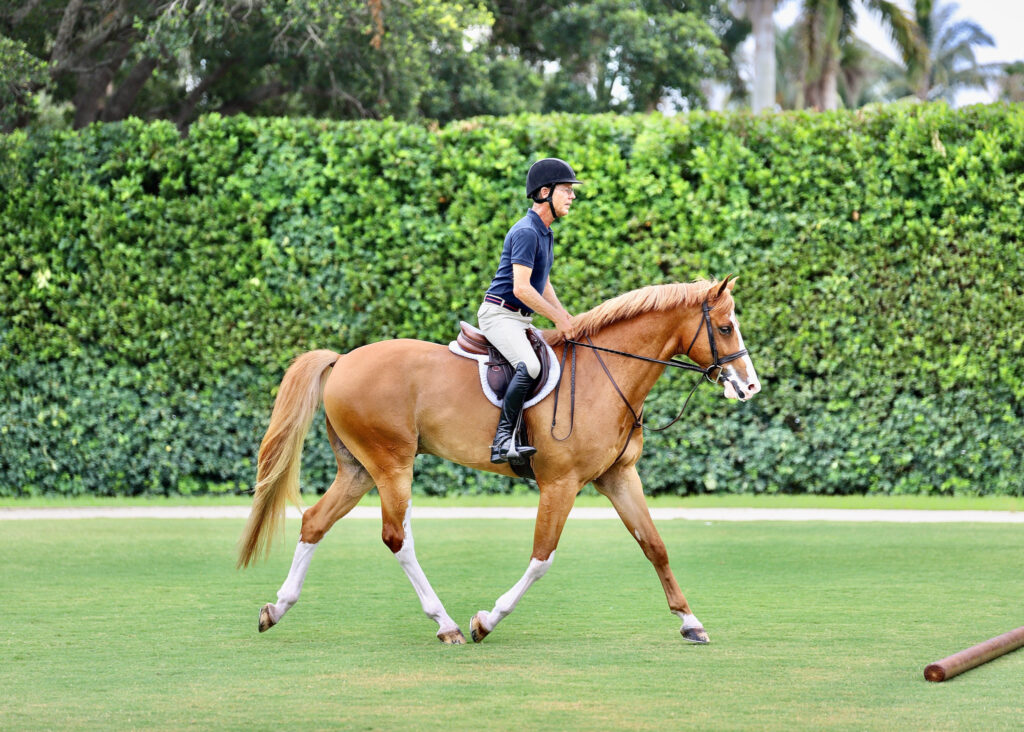
Step 3. Keep your body balanced over the middle of your horse as you go over the poles in posting trot. Follow his neck forward with your hands, maintaining a light connection with his mouth.
Repeating this several times from each lead will teach both you and your horse to stay balanced and patient in the approach. As you practice this exercise over time, you’ll eventually be able to make the transition more quickly but still smoothly. The goal is to always avoid rough transitions.
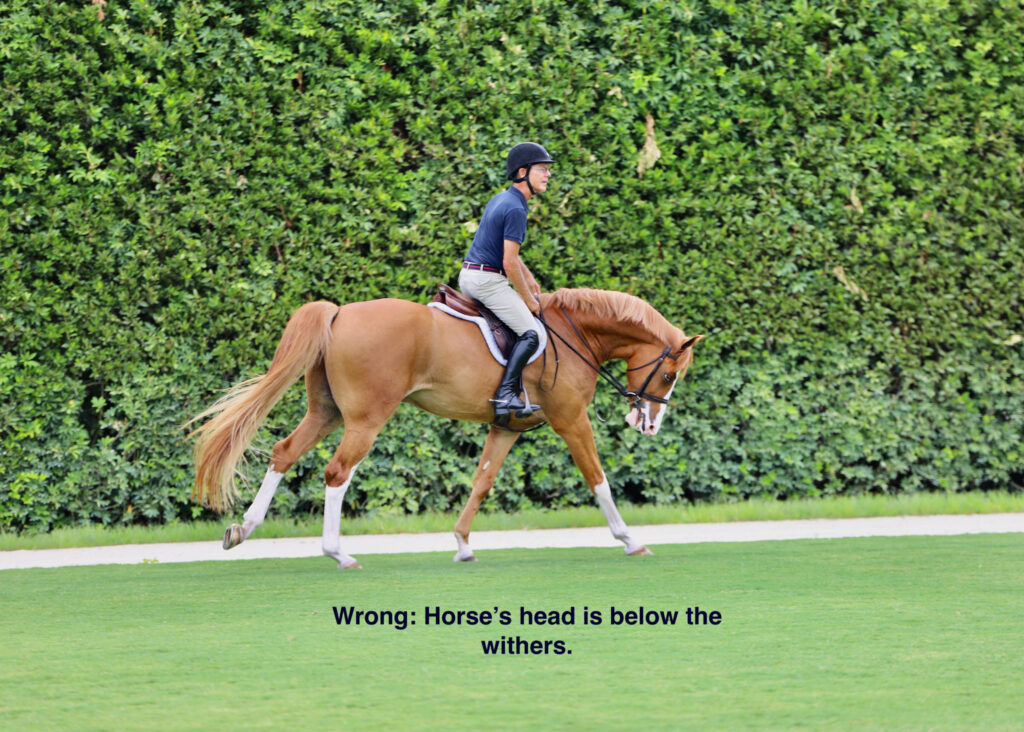
Common Mistakes in This Exercise
Mistake 1. Instead of establishing a quality, rhythmic canter before the trot poles, I’ve allowed Babylon’s head to drop below his withers, which destroys his balance and natural, relaxed topline.
Mistake 2. After the transition to trot, my horse’s neck is curled and shortened, preventing him from using his head and neck correctly in the approach to the poles.
Mistake 3. Here, because I’ve used too much rein pressure in the canter-trot transition, Babylon has raised his head and shortened his neck, making it impossible to take relaxed, even steps over the poles.
For More:
- Next week in Part 2 of this two-part series on trot jumps with John French, he explains how to ride another trot-jump exercise involving cantering into a line and trotting out.
- Read more with John French on Practical Horseman here.
About John French
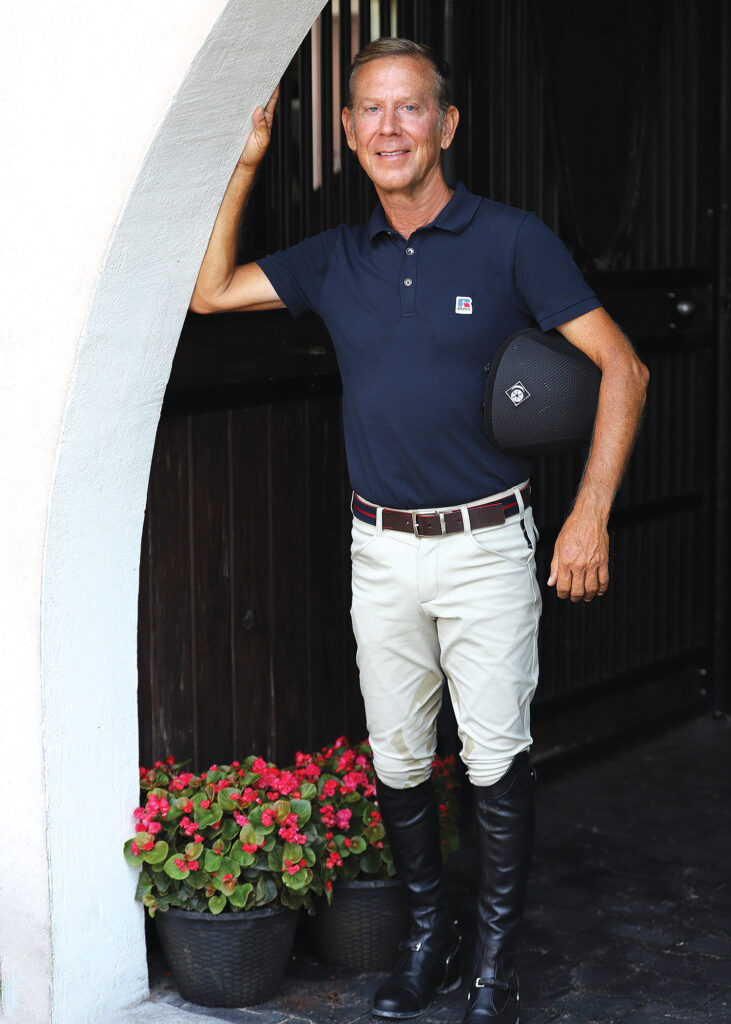
Champion hunter/jumper rider John French broke onto the A-circuit as a Junior by catch-riding other people’s horses and ponies. He won the Maryland Equitation Finals self-trained and on a borrowed horse. Since then, he has represented the United States in Nations Cups and FEI World Cup™ Finals, won the title of World Champion Hunter Rider four times, the California Professional Horsemen’s Association Pre-Green Incentive Rider of the Year three times and the West Region U.S. Hunter Jumper Association Hunter Derby Rider of the Year annually since 2016. He was the 2019 WCHR Professional National Champion and was inducted into the National Show Hunter Hall of Fame the following year. John is now based in Wellington, Florida, where he oversees the hunter division of show jumper Kent Farrington’s business, KPF.