

Kaylawna Smith-Cook, daughter of top five-star eventer Tamie Smith, has become a successful eventing rider and trainer in her own right and currently has a promising string of up-and-coming mounts. But even with her eventing super-star mom, Smith-Cook didn’t take riding too seriously growing up.
She rode off and on as a kid while spending time at the barn with her mom and has vivid memories of clashing with an aggressive goose while trying to retrieve her pony from the back turnout field. She continued to ride casually throughout her teenage years, but something changed after high school.
“I kept feeling this pull to come back to riding,” Smith-Cook said. “That was the moment I knew I really wanted to take eventing seriously.”
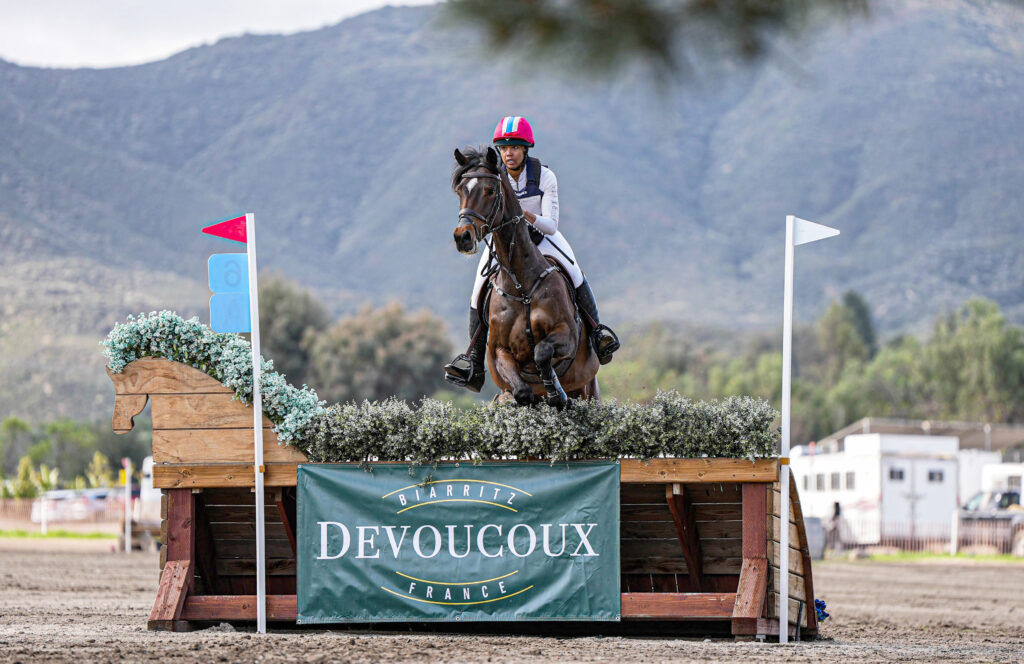
While she continues to help run Smith’s sales operation at Next Level Eventing in Temecula, California, the 29-year-old now owns and operates her own nearby training program, K. Smith Equestrian. Her program has around 22 horses and she has cultivated solid partnerships with owners who are invested in the sport and the horses’ well-being.
In her program, Smith-Cook is keenly focused on listening to her horses, learning what they’re telling her and applying that knowledge to bring her young eventing mounts along at their own pace.
Here, she talks about how she and Smith make the parent/coach relationship work, her current string of talented horses and how she perseveres through the inherent ups and downs of the sport as she chases her goal to be a top U.S. eventer.
Learning From the Best
Throughout her formative training days, Smith-Cook rode under the tutelage of her mom, as well as Australian show jumper Scott Keach, eventer Gina Economou and dressage rider and trainer Niki Clarke. She completed her first CCI3*-L at Galway Downs in 2019 aboard her longtime eventing partner Passepartout, and her competitive record includes multiple wins—most recently in the Open Modified division at the 2025 USEA American Eventing Championships.
“Niki gave me a great foundation on the flat and kick-started the basics I really needed. And Scott has been a huge mentor for me,” Smith-Cook said. “I’d been relying on my natural ability to ride, but after having my daughter, a lot of things hit me at once and I wasn’t sure if I wanted to continue in the sport. Scott took me under his wing and helped me find my confidence again.”
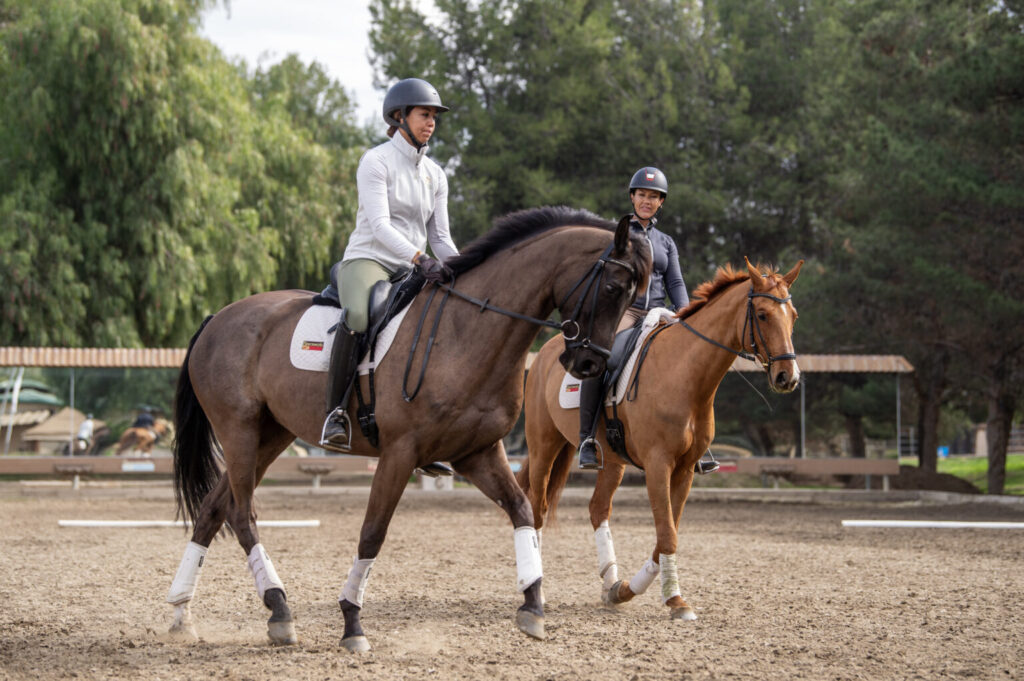
The overwhelming support she received from Keach, Smith and her husband, Tyler Cook, along with sage advice from equestrian performance coach Natalie Hummel, helped the budding eventer find her way back to achieving peak performance. While Smith-Cook admits that the mother-daughter/coach-student dynamics were tricky at times, she’s grown to appreciate her mom’s knowledge and experience in the sport.
“We would bicker sometimes—and still do—I have my opinion about some things, and she has hers,” she laughed. “But we work on separating our relationship as mom and daughter from our coaching relationship. At the end of the day, she’s one of the best eventers in the world, so I want to learn everything I can from her. Plus, it’s great to bounce ideas off each other.”
Developing Her Training Program
Among Smith-Cook’s current string of up-and-coming horses are Remember Me, Dealas, Coco Chanel, Picadillys Pride M.E., Calling Cooley and Connery Cooper Z, several of whom proved their talent at the Galway Downs International Horse Trials last spring.
“It really takes at least a year to get to know a horse, even if they’re experienced. I try to always be in tune with my new horses and work on developing solid partnerships with them,” she said. “Now, I feel like I’m finally on the same page with all of them, and I’m really excited to show the world what they can do.”
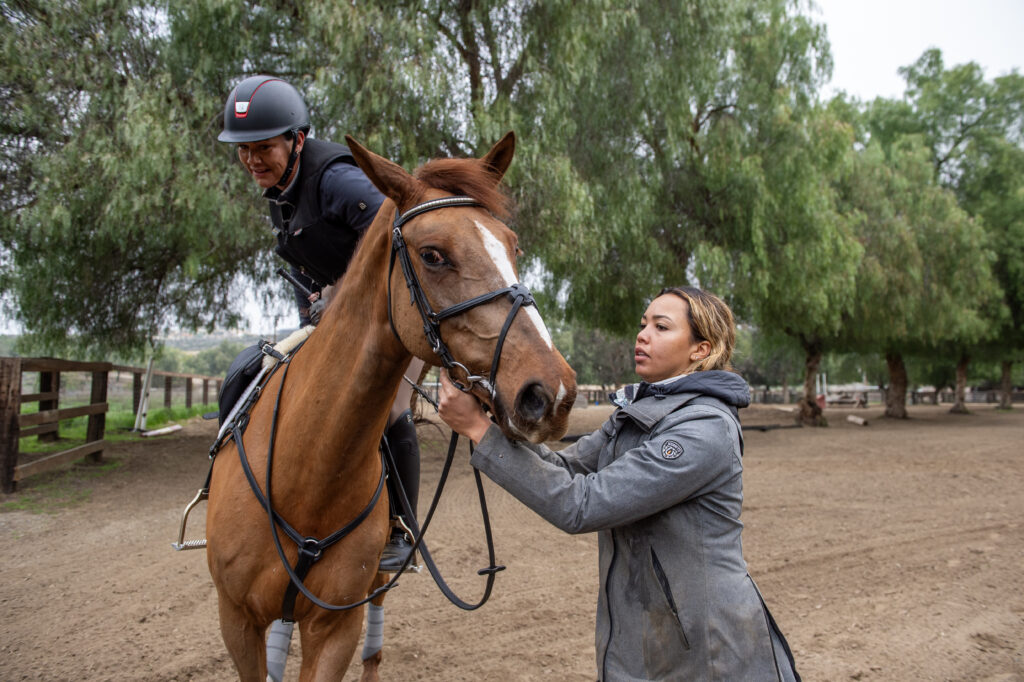
Because she grew up in Smith’s program, Smith-Cook had a first-hand opportunity to learn how to cultivate successful partnerships with owners and currently rides horses for Ruth Bley, Bonner Carpenter, Molly and Jen Duda and Brianna Halliday.
In bringing her younger horses up the eventing ranks, Smith-Cook notes the importance of taking things slow and being patient to allow each horse to progress at his own pace.
“I tend to err on the side of being cautious and letting my horses go slower. Some learn faster than others, so it’s a matter of listening and getting to know them inside and out,” she said. “Other horses can be going along great and then you hit a speed bump and have to go back and do some homework.”
In her training program, Smith-Cook focuses on ensuring her horses are adjustable for the different eventing phases and finds pole work helpful for encouraging this. “At least once a week, I set up canter poles on varying distances around the arena and practice cantering them to work on rhythm and extending or collecting the canter where needed,” she explained. “This helps ensure I can maintain that same feeling of balance with whatever type of canter I have.”
Managing the Eventing Roller Coaster
Early on in her career, Smith-Cook couldn’t fully recognize the depths of disappointment eventers often face due to the sport’s unpredictable nature, but her mom Smith’s experience taught her that it’s far from easy and requires an enormous amount of grit, determination and the ability to be kind to yourself. She found this wisdom especially important after having her daughter Kennedi four years ago.
“I struggled with how to move forward, but Kennedi also helped ground me and realize what’s most important in life,” she said. “Eventing is equally a priority, but I think as a top athlete, you can sometimes get too consumed with the results and winning.”
Smith-Cook has learned to view wins and losses as additional learning curves in a journey that has just as many highs as lows. Early this year, she competed at Rebecca Farm in Montana with high hopes, but she fell off and wasn’t able to ride her other horses as a precaution after hitting her head.
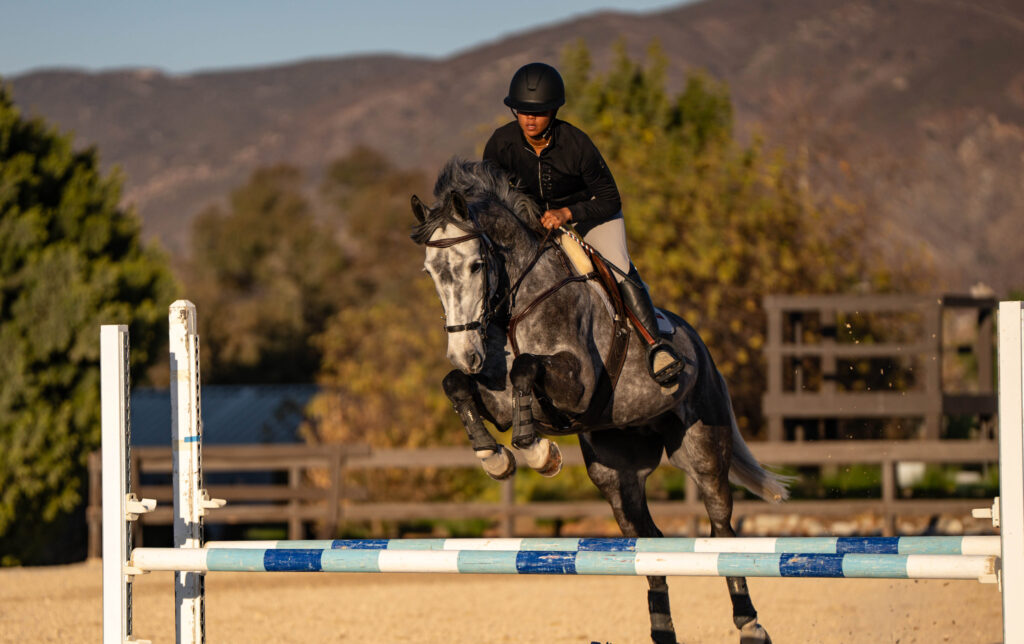
“That was just a bump in the road on a long journey. You feel upset and then move on,” she noted. “It’s one of those things horses are so good at teaching us—you have to roll with the disappointments as well as the highs.”
After learning to accept failure as part of the experience, Smith-Cook instead focuses on how grateful she is to have a career working with horses outside in nature every day. The hardest part of her job is learning how to find the right balance between her family, horses, clients and competition goals.
“It’s a challenge to commit to my goals while still feeling like I can give 100% to my daughter and husband, as well as to my clients and the horses at home who don’t show,” she said. “We plan ahead and take family trips to the beach or mountains to make sure we have those family moments while Kennedi is young because time is already going by so fast.”
Good Horsemanship: Listening and Learning
Smith-Cook has a long career ahead of her, but even at her young age, she’s learned that results don’t define you or make you a good horseperson. “It’s about your ability to continue learning and listening to your animals,” she said. “Prioritizing the management and care of your horses is paramount. They are not machines. They’re living, breathing animals.”
She and Smith are always looking for ways to take better care of their horses through new therapies and simply paying attention to the day-to-day things that promote their long-term health. These small but crucial details add up and contribute to their horses’ longevity and their happiness.
“It’s just an indescribable experience when you have great horses that you’re completely in sync with—the partnership and the adrenaline you experience together when they love their jobs so much,” Smith-Cook said. “Eventing is addicting. It doesn’t always go well and there’s always something to improve and work toward. You’re constantly putting the pieces of the puzzle together for the better.”
Don’t miss our Practical Horseman Podcast with Kaylawna Smith-Cook; you can listen here.