

A deeper, more independent seat transforms both rider and horse. This month, I encourage you to explore riding without stirrups to improve your seat. You’ll find that going sans stirrups helps you move more freely, feel more connected and ride with harmony, confidence and forward energy.
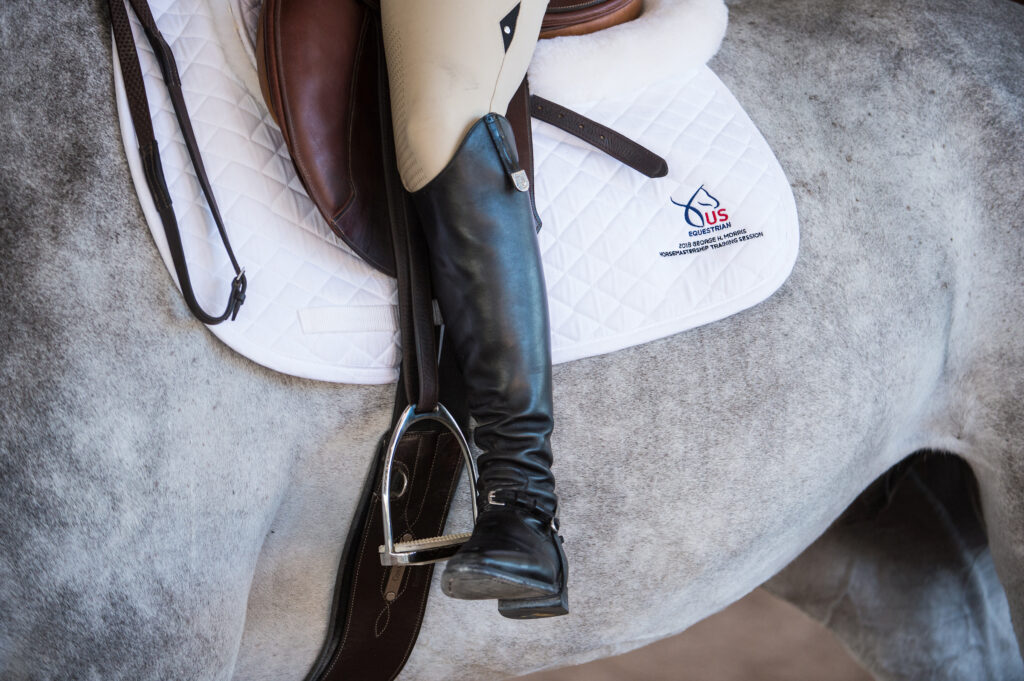
Riding without stirrups, or with long stirrups, can help you find a deeper seat but must be done carefully. If you opt to go without stirrups, you should do so safely (including always wearing a helmet), gradually, for short periods of time and on a suitable horse who doesn’t mind it. Older or weak-backed horses may not tolerate extended no-stirrup work, and young horses should never be asked to do it. Beginner riders should be especially cautious and have supervision or assistance. Also note that adding speed increases the risk of involuntary dismount when riding without stirrups.
Riding Without Stirrups—Done the Right Way
When working without stirrups learning how to breathe and let go are essential. Humans are bipeds designed to balance over their legs. We are born with a fear of falling and injuring our brain, which is why we instinctively stand and walk. This protective instinct can make riding without stirrups uncomfortable, even intimidating, potentially triggering the sympathetic nervous system. Many riders inadvertently grip with their thighs, which pushes them out of the saddle and can cause tight hips, strong hands, leaning back, rigid bouncing, holding your breath and fetal-like bracing.
When you first start, try just walking without your stirrups or drop only one at a time to get a sense of what your horse’s motion feels like without the support of your irons. After progressing slowly from the walk, you can start to incorporate short periods of trotting and then canter work as you get stronger and more comfortable.
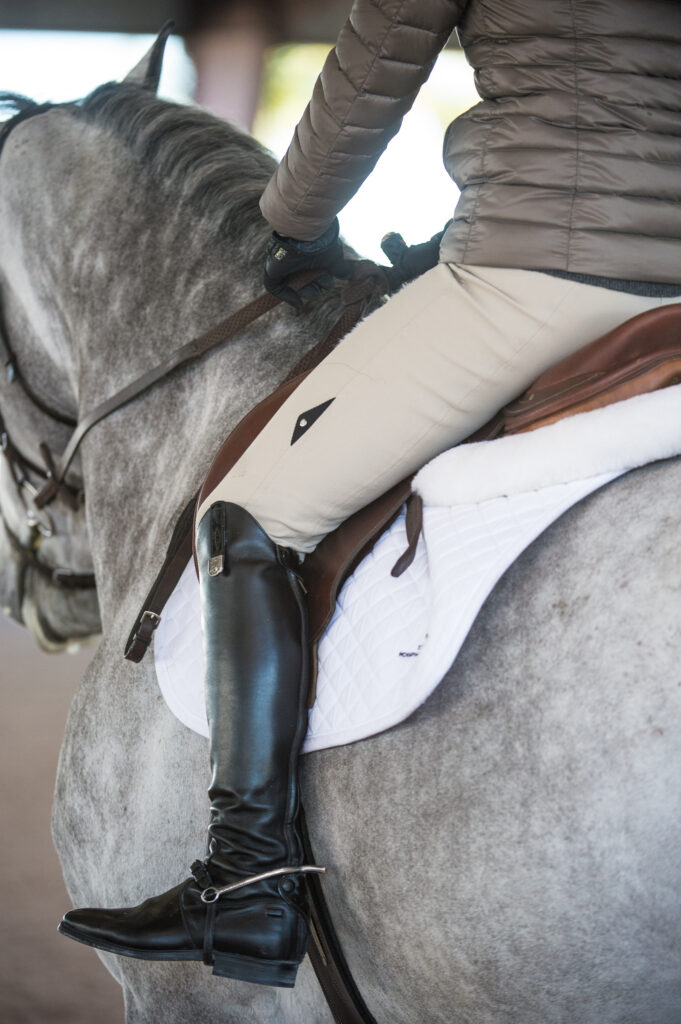
Classical training in any discipline should include cross-training to help you develop and preserve a well-rounded seat. In combination with your normal training and schooling, I recommend stretching days with shorter stirrups, trail rides with potentially shorter stirrups, cavalletti work with shorter stirrups and longe lessons with longer stirrups or no stirrups, allowing the legs to hang and “breathe” with the horse—without gripping in the thighs, glutes or abdominals. The goal is to find a consistent, mindful practice benefiting both rider and horse.
General Tips for Riding Without Stirrups
- All your joints must be relaxed and available to move with your horse.
- Your horse’s center of gravity is constantly shifting; your seat must allow this movement to flow.
- Picture-perfect positions are helpful as a map, but the goal is a soft, supple and adaptable seat.
- A supple seat prevents blocking the horse, which can cause unsteady connection, a dropped back, rein lameness and eventual soundness issues.
- Work toward “positive tension” in both yourself and your horse. Positive tension is an athletic readiness to perform the task without extra effort, supporting the horse’s activity, engagement and self-carriage.
You Don’t Have to Ride Without Stirrups to Improve Your Seat
True improvement begins with intention. Every ride should benefit your horse, shaping his muscles, balance and longevity. As the classic German text “the rider forms the horse” reminds us, riders are responsible for their horse’s development, and training should enhance soundness, longevity and beauty of partnership.
To be clear: You do not need to ride without stirrups to improve your seat, and the potential downsides must be considered. Horse welfare always comes first, and rider safety is paramount. The idea is positive—a month devoted to a better, more classical seat and way of riding.
There are many ways to develop a supple, independent seat:
- Unmounted Feldenkrais Method exercises
- Fitness training
- Lunge lessons
- Yoga, Tai Chi
- Dance or body-awareness practice
- Reading books
- Studying videos of favorite riders
This is about options and awareness, not forcing a potentially harmful practice. No matter age or experience, the goal is self-betterment for the rider to benefit the horse. Time well spent in the saddle, the right horse and the right trainer remain unmatched for improving riding. Coordination training, nuance and feel are the “nuts and bolts” of the ever-evolving relationship between horse and rider.
Riders of all disciplines know the importance of improving their positions. Many focus on the “perfect” position without understanding that riding is not about posture, but about moving harmoniously with the horse while performing specific functions in a biomechanically sound way.
No-Stirrup Success Story
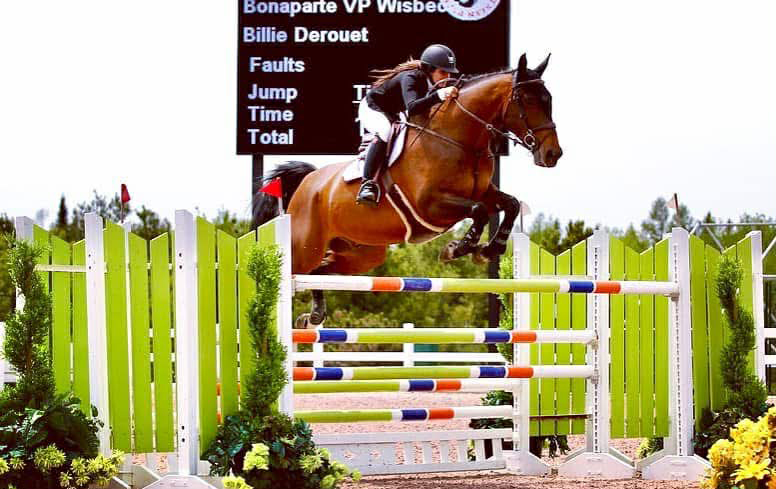
“To me, No-Stirrup November equals the Royal Winter Fair National Final CET Medal Class (the Canadian Equivalent to medal Maclay). At 13 years old, I got called back into the top four. They asked us to take our stirrups off and execute a final test over fences. I was the first to go, and barely speaking English at that time, I wasn’t exactly sure where I was going. But my balance and seat training helped me to go around beautifully and I moved up a spot to finish National Reserve Champion. This foundation and working without stirrups got me to Grand Prix level success at the age of 15. Today, I share this knowledge with my students.”
— Professional rider Billie Derouet of Quebec, Canada, who trained with Dave Thind
Takeaway
We hope you consider going without your irons this No-Stirrup November to develop an independent seat and more harmonious partnership with your horse. Be sure to let us know about any improvements you discover by riding sans stirrups via our social-medial channels or you can email us at practicalhorseman@equinenetwork.com.
About Dave Thind
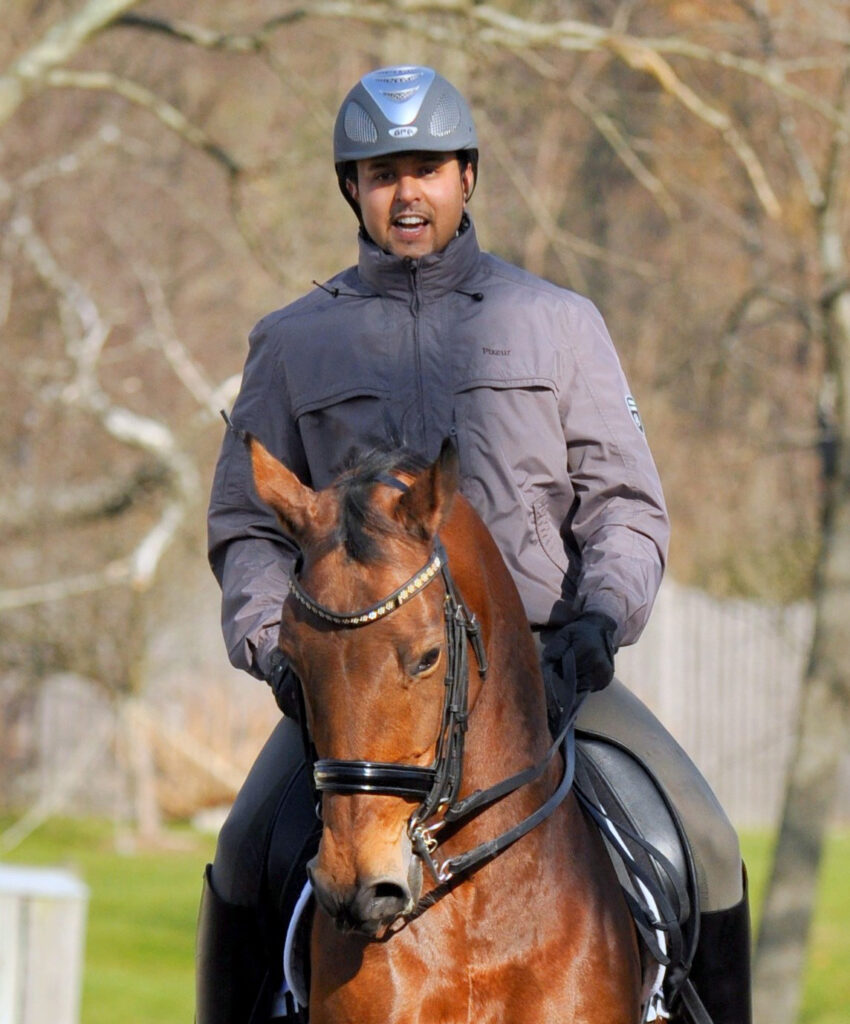
Born in Canada and trained in Germany, Dave Thind makes his home in Walpole, Massachusetts, as owner of Aspire Farm since 2013. Thind has himself competed at the Grand Prix level in dressage and jumping. He is a noted equestrian biomechanics authority, with several published articles and appearances as an expert guest or lecturer to his credit. He received his German ‘Trainer A’ license in 2007 with a nearly perfect score awarded to him from the German National Federation. He holds an International Trainer Passport Level III and is an Authorized Teacher of Feldenkrais Awareness Through Movement.